Close
Close


Our Infrastructure Planning Appraisal and Development MSc students graduate from the course equipped to create more holistic, robust and sustainable infrastructure project outcomes.
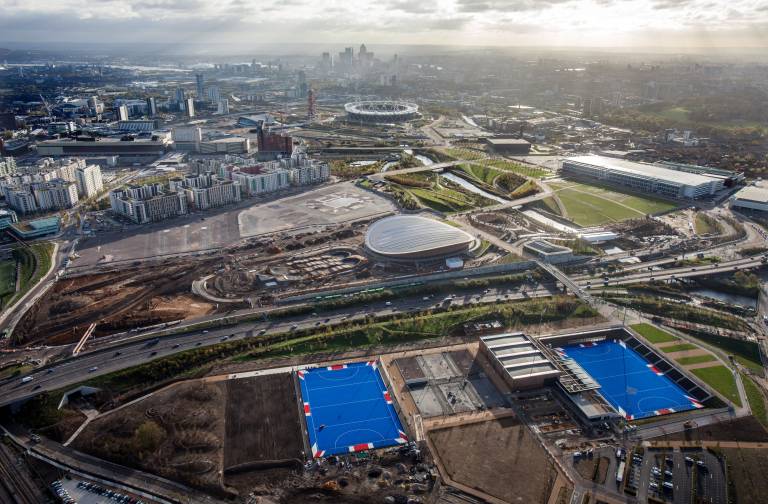
Cities, regions and nations are grappling with unprecedented economic, environmental, social, and demographic challenges that create an urgent need for both the public and private sectors to rethink their current practices. While these challenges may vary in nature, they all share a common requirement: the development of relevant, efficient, sustainable, and resilient infrastructure systems and services.
Well-planned infrastructure serves as the fundamental building blocks of our society. For example, it plays a crucial role in providing essential services to households and businesses, facilitating trade and leisure activities, providing equitable access to opportunities, rebalancing struggling communities, curbing the emission of harmful greenhouse gases, and shielding us from an increasingly unpredictable environment. Whether it's public investments in transportation, water supply, flood defences, social infrastructure, and parks or private contributions to telecommunication systems, broadband networks, and energy projects, infrastructure forms the backbone of our well-being and prosperity.
About the course
The Infrastructure Planning Appraisal and Development MSc is designed in consultation with leading infrastructure practitioners to equip you with the necessary skills to plan, appraise and develop large-scale and complex infrastructure programmes and projects fit for the multiple challenges of an increasingly uncertain world.
Why choose to study infrastructure planning appraisal and development at The Bartlett?
We offer:
- A multi-disciplinary teaching approach and innovative planning and appraisal methods for infrastructure project development
- A shared site with the OMEGA centre, which has conducted case studies in mega infrastructure decision-making in ten economies in Asia and the Pacific, Europe and North America
- Direct classroom contributions from over 30 leading experts and senior practitioners from a variety of sectors and disciplines
- An international programme, developed with inputs from industry, that recognises that any judgements about infrastructure success need to be examined with multiple contexts.
Who should apply?
We welcome applications from both those with experience of the infrastructure development profession and new entrants into the field.
We also offer opportunities for flexible study, with our students either completing the course on a one-year full-time basis, or in a modular/flexible study mode, completed within two to five years.
Course structure
The Infrastructure Planning, Appraisal and Development MSc comprises eight modules (including seven core modules and one optional module) and a final dissertation.
Core modules are taken by all students of the Infrastructure Planning, Appraisal and Development MSc and cover the fundamental areas of infrastructure project knowledge. Starting from the assumption that the planning, appraisal and delivery of such projects is a multi- disciplinary field, the teaching approach of our course integrates aspects of different core disciplines such as public policy-making and planning, project management, civil engineering, economics and behavioural economics, sociology, politics, law and geography that go beyond the ‘disciplinary silos’ usually found in academia and practice.
Optional modules enable students to build up an individual specialisation based on their own interests and career objectives. Students can choose optional modules from a wide range of thematic topics covering:
- Public policy
- Spatial planning
- Sustainable urbanism
- Urban regeneration
- Urban design
- Transport planning
- Project management
Lectures are interactive, favouring participation of and discussion between our students around the multiple topics tackled during the lessons. We integrate theory and practice, encouraging input from the class to benefit from the different backgrounds and perspectives of the students, lecturers and visiting practitioners.
- Read more about our core modules
- Infrastructures as Agents of Change (15 credits)
- Business Cases for Infrastructure (15 credits)
- Risk, Uncertainty and Complexity in Decision-Making (15 credits)
- Critical issues in Infrastructure Funding, Financing and Investment (15 credits)
- Infrastructure Policy, Planning and Consent (15 credits)
- Sustainability and Major Infrastructure Investments (15 credits)
- Major Infrastructure Planning Practice (15 credits)
- Environmental and Social Assessment of Infrastructure (15 credits)
- Read more about our topics to help you specialise through your studies
In addition to the range of optional modules on offer across The Bartlett Faculty of the Built Environment (subject to availability), you can use your optional modules to specialise in subject areas offered by the The Bartlett school of Planning in more depth. Our specialisms operate best in module pairs, but many of these modules can also be taken as standalone units.
Our specialism topics at The Bartlett School of Planning include:
Infrastructure Planning:
This specialism consists of two modules addressing the question 'what constitutes a successful infrastructure project, programme or plan'. The first module 'Infrastructures as Agents of Change' defines the characteristics of infrastructure projects, programmes and plans of various kinds and examines their roles as agents of change. It encompasses an understanding of past perspectives of the role of such investments and investigates 21st century perspectives in a context of global interdependencies of economic growth and environmental impacts as sustainability concerns loom large as key challenges. The second module 'Critical Issues in Infrastructures Funding, Finance and Investment' focuses on issues that cross all infrastructure sectors in the developed and developing world. It examines challenges seen to be critical to sustainable investments. While not exhaustive, the module examines the: role of PPPs, impacts of corruption, ‘Section 106 & Community Infrastructure Levy, Property value uplift and Tax Incremental Financing and impact of fiscal devolution.
Investigating Urban Transformation in Historic Cities:
This specialism provides interdisciplinary theoretical and practical tools to investigate the context and dynamics of urban transformation in historic cities. The two modules, 'Planning Discourses for Historic Cities' and 'Planning Practices in Historic Cities', analyse planning processes - both discourses and practices - used to conceptualise and regulate the rate and direction of physical change in historic urban environments. The specialism is open to students from different backgrounds and Masters programmes who are passionate about querying the complexities of urban conservation and development from different perspectives (research, policy, design and practice).
Planning for Housing:
This specialism examines the context for and process of residential development in the UK and is divided into lecture-based and project-based components. The lecture-based component, 'Planning for Housing: Process', begins by looking at the drivers of residential development including the demographics of growth. It considers who provides housing and at the evolution of the UK policy context and its current objectives. The component then looks at the residential development process from strategic and development planning, land acquisition to the occupation of homes under different tenure arrangements. The lecture programme is divided into three parts: concerned firstly with broad perspectives on housing growth, policy and planning; secondly, with housing providers, processes and delivery; and thirdly, with critical debates and outcomes today. The project-based component, 'Planning for Housing: Project, challenges students to apply and extend their knowledge of development drivers, actors and practices to real-life housing development opportunities in London. Via small group organisation, students will co-ordinate the completion of a comprehensive feasibility study and housing development brief for a specific site. Groups will be allocated strategic mandates reflecting the current policy context and objectives explored in 'Planning for Housing: Process' and will then plan, design and initiate the implementation of a development scheme from a selected development actor perspective, reflecting tenure, design, and organisational intentions. Schemes will be collectively proposed and managed and then presented by each team to an audience of peers, staff and relevant experts in the field.
Planning for Sustainability, Climate Change and Inclusion Planning for Urban Design:
This specialism looks at the inter-related themes of sustainability and inclusion. In the term one module 'Planning for Sustainability and Inclusion', a variety of conceptual issues surrounding the governing process for achieving urban sustainability are examined alongside the challenges involved in defining and achieving inclusion in the planning process. Students then have a choice in term two. If they wish to focus more on environmental sustainability and, in particular, the climate emergence, they can take 'Sustainability, Resilience and Climate Change'. If they wish to delve further into the problematics of inclusionary planning, they can take the 'Participatory Urban Planning Project'. Both of the term two modules take the form of a project, pursued through teamwork and in collaboration with external stakeholders.
Planning for Urban Design:
This specialism considers design across a range of different scales of operation, from those dealing with settlement form, to those dealing with land use mix, to those concerned with detailed design and individual site layout and comprises 'Urban Design: Density and Form' and 'Urban Design Governance'. To that extent planning is undoubtedly a design discipline and planners need to be aware of, and be concerned with, the design consequences of their decisions on the ground. To explore this role, the Urban Design Specialism is divided into two parts, reflecting the two primary means through which planners engage in urban design – first as members of collaborative design teams, who critique and advise on design proposals, and second as policy and guidance writers. Part one examines the design process through analysis, critique and the generation of alternatives for site-specific design projects. Part two addresses the process of design guidance writing and implementation.
Smart City Theory and Practice:
Run by UCL’s Centre for Advanced Spatial Analysis (CASA), these modules give you an introduction to the theory and science of cities, and technological perspectives on ‘smart cities’. Term one deals with more general perspectives on cities developed by urban researchers, systems theorists, complexity theorists, urban planners, geographers and transport engineers will be considered, such as spatial interactions and transport models, urban economic theories, scaling laws and the central place theory for systems of cities, etc. Term two then looks more specifically at the development of smart cities through a history of computing, networks and communications, of applications of smart technologies, ranging from science parks and technopoles to transport based on ICT. The course will cover a wide range of approaches, from concepts of The Universal Machine, to Wired Cities and sensing techniques, spatio-temporal real time data applications, smart energy, virtual reality and social media in the smart city, to name a few. Overall, students will develop a critical approach to more technological and quantitative understandings of the development and management of cities.
Sustainable Development Themes and Goals:
This pair of modules is concerned with sustainable development in relation to the theory of urban development and spatial planning practice in cities associated with sustainable development goals. The first module 'Sustainable Urban Development: Key Themes' focuses on sustainability debates and literature, with a specific focus on cities. The second, 'Sustainable Development Goals and Spatial Planning', explores how the Agenda 2030 and Sustainable Development Goals (SDGs) are implemented at the local or municipal level in cities.
Urban Regeneration:
This specialism is concerned with innovation, urban and regional economic development and regeneration and comprises two modules – 'Urban Regeneration: Urban Problems and Problematics' (term 1) and 'Delivering Regeneration Projects II' (term 2). The issues are analysed in the context of development economics, the new space economy, the agglomeration of innovative high-technology industries, the concepts of the innovative and creative milieu and emerging forms of urban governance. These analyses are brought to bear on project work, which allows for the examination of the relationship between those broad trends and specific local contexts and processes. The specialism comprises 2 modules: the first focuses on the theoretical framework for the understanding of the spatial and socio-economic dynamics of contemporary cities, the second is structured around a project in which students are invited to apply the theory and develop their own strategies for the regeneration of a locality.
Work on a 'live' case study
Through our 'Major Infrastructure Planning Practice' module, you will have the opportunity to tackle a 'live' case study through a simulated consultancy exercise. Our student consultancy teams respond to a project brief with parties from government and practice acting act as proxy clients during the preparation and presentation of their work. It is here that the new knowledge acquired from core modules is synthesised, integrated, and tested in the context of a live problem-solving situation.
Field trips
The Infrastructure Planning Appraisal and Development MSc includes a residential field trip where we explore the issues and themes introduced by the course in different place contexts. This field trip offers our students an opportunity to consider built environment issues in real world settings and network within the community of the course.
The cost of travel and accommodation for the field trip are covered by UCL although students will need to cover meals and other personal expenses.
- Discover our recent field trips
In recent years, our students students have visited and received specially arranged presentations from a wide range of senior professionals, civil servants and academics regarding:
- High Speed TGV network, France
- Hafen City Regeneration Project, Hamburg, Germany
- The Rotterdam Central Station, Netherlands
- East Anglia TWO Offshore Wind Farm, UK
- Hinkley Point C Nuclear Power Station, UK
- Maeslant flood protection barrier, Netherlands
- High Speed 2 Rail Project, UK
- Mersey Tidal Scheme, UK
- Randstaad Rail, Netherlands
- Maasvlakte 2 Port, Rotterdam, Netherlands
- Emsche Landschaft Park, Duisburg, Germany
- Brussels Station area development, Belgium
- Öresund Link in Sweden and Denmark
- Trans-national Mega Infrastructure Developments and Investments, European Commission, Belgium
Complete a research-based dissertation
The dissertation is an in-depth piece of work that allows you to specialise in a topic of your choice at the forefront of major infrastructure development. You will gather and analyse primary and/or secondary data, review the existing literature on your chosen topic, and receive additional support from an allocated dissertation tutor throughout the preparation and development of your thesis. Ultimately, the dissertation is a chance for you to apply your newly acquired knowledge in further studies or through the next stage of your career.
Supplementing the dissertation and the course module 'Major Infrastructure Planning Practice' are individual tutorials offered to students throughout term time to provide rapid responses to your questions. In addition to these tutorials, we will also support you by connecting you with our alumni who are now either engaged in their PhD studies or working as student mentors at The Bartlett School of Planning's OMEGA Centre.
- Discover examples of recent students' dissertation topics
- Complexity and innovation in infrastructure planning: Analysis of the adoption of the G20 principles for infrastructure project planning in Mexico
- The use of multi-criteria analysis in decision-making on mega infrastructure projects: The case of the Rotterdam Mainport Development Project
- The metro as an agent of sustainable urban development: Choosing the ‘right’ success criteria for the Riyadh Metro
- Examining the UK's readiness to implement nature-based solutions in infrastructure: A technological innovation systems perspective
- The analysis of the winners and losers of the Hangzhou Bay Bridge Project in China: An examination of the role of PFI in mega infrastructure projects
- A critique of mega infrastructure project appraisal frameworks: Lessons for Abu Dhabi megaprojects
- The role of ODA in PPP infrastructure projects to achieve sustainable development in developing countries: A Case of Xe Pian Xe Namnoy Hydroelectric Power Project in Laos
- Mega transport infrastructure projects, their dualistic role in activating globalization and promoting long-term strategic planning: A comparative analysis of airport rail links in Hong Kong and New York.
- Investigating the key Barriers to wind and solar power investment and development in South Africa: A private investor's perspective
- Exploring the extent to which digital environmental impact assessment can promote more effective public participation in major infrastructure projects under the UK planning context.
More details of these modules can be found in the UCL module catalogue.
Please note that the course structure and list of modules given here is indicative. This information is published a long time in advance of enrolment and module content and availability are subject to change.
The OMEGA Centre
The OMEGA Centre at the Bartlett School of Planning was established in 2005 and funded by the Volvo Research and Education Foundation (VREF). It sought to address the growing international realisation of the need to better understand what constitutes a 'successful' megaproject, and how better to enable such projects to meet multiple (sometimes conflicting) objectives given the increasingly uncertain and complex 21st century environments and the need for more sustainable development approaches.
The Centre’s findings concerning ‘successful’ megaprojects were amassed over more than ten years and have significant potential to shape the future planning, appraisal and delivery of major infrastructure projects. On the basis of its track record, the OMEGA Centre has been engaged in strategic advisory work for: the Institution of Civil Engineers (the Actuary Profession) Infrastructure UK (the HM Treasury), and the European Investment Bank amongst others.
The Infrastructure Planning, Appraisal and Development MSc was originally based on the work of the OMEGA Centre and still draws heavily on the studies undertaken in this field by the centre, informed by the narratives of some 300 project stakeholders in 10 countries, and 30 megaproject case studies.
The OMEGA Seminar Programme
The OMEGA Centre runs an annual seminar programme. Launched in January 2009, this programme focuses on important topics concerned with the planning, appraisal and delivery of mega projects and their impacts on development as agents of change. The seminars are open to everyone with an interest in mega or major infrastructure development.
- Read more about the OMEGA Centre Seminar Programme
Over the years, the OMEGA Centre has benefited from numerous internationally and nationally renowned infrastructure experts on a variety of topics.
A selection of the most recent presentations include:
- Adaptive Regulation and Planning for Utility Mega Infrastructure Projects: Issues for economic regulation in water and energy, Prof. M. Hurst First Class Partnership on The Lagos Metro Blue Line, Michael Schabas
- Evaluation of Complexity Across the Nexus: A Summary of CECAN’s Research Findings of Relevance to Mega Infrastructure Policy and Planning, Prof. Liz Varga
- Private Consultant on US NE High Speed Corridor, Robert Ravelli
- HACAN on Heathrow’s Third Runway, John Steward
- The Two Stories of London’s Crossrail, Christian Wolmar
- The ‘Power of Context’ and Addressing Risk & Uncertainty in Mega Infrastructure Decision-making: What the global infrastructure crisis, climate change and COVID-19 taught us? Prof. H.T. Dimitriou
- The Sizewell Nuclear Plant: Challenges & prospects of public-private-partnership in UK, Amar Qureshi & Chris Wright
Careers and employability
Students who graduate from The Bartlett School of Planning have been very successful in gaining subsequent employment and have progressed into employment with a wide range of both public and private sector employers.
With strong links to industry, government and academia on a global scale, many of our students have gone on to find placements within the first year after graduation, have taken up positions in fund management, local and national government, international financial institutions, international cooperation agencies, investment banking, community development, academia, consulting and the construction industry. A number of our graduates have also been accepted to undertake PhD studies at UCL and other prestigious institutions.
Staff
- Programme Director
Dr John Ward
View John's profile- Teaching staff
Professor Harry Dimitriou
View Harry's profileProfessor Robin Hickman
View Robin's profileDr Dan Durrant
View Dan's profile- Contributing experts
We invite leading experts in fields related to infrastructure planning, appraisal and development to present their practical perspectives and enhance the theoretical content of each of our course modules.
To date, leading experts who have contributed to our course include:
- Stephen Passmore, Future of London
- Joseph Lowe, HM Treasury
- Robert Upton, Infrastructure Planning Commission
- Andrew Hayward, Balfour Beatty Plc
- Keith Perry, EC Harris International
- Stephen Potts, Environment Agency
- Peter Twelftree, Steer
- Tom Higbee, Steer
- Dr Roger Allport, Imperial College London
- Eleni Kyrou, European Investment Bank
- Brian Field, European Investment Bank
- Chris Lewin, Actuarial Profession
- Prof. John Adams, UCL
- Dave Snowden, Cognitive Edge Pty
- Dr John Stone, Kings College London
- Prof. Michael J. Batty, UCL
- Dr Ulf Dahsten, London School of Economics
- Prof. Sir Peter Hall, UCL
- Dr Mayer Hillman, Policy Studies Institute
- Detlef Golletz, Thames Gateway Institute for Sustainability
- Prof. Andrew Sterling, University of Sussex
- Jon Wills, formerly of London Underground
- Peter Head, Ecosequest Trust and formerly of Ove Arup
- Prof. Willem Salet, University of Amsterdam
- Niall McNevin, formerly of Olympic Legacy Co., now Mott MacDonalds
- Oliver Sparrow, formerly of Chatham House